Junge Brezel
Junge Brezel
Brand & Product Designer · Food & Beverage · 2025
Brand & Product Designer · Food & Beverage · 2025
Tools:
Tools:
Illustrator, Photoshop
Illustrator, After Effects
Industry:
Industry:
Food & Beverage
Food & Beverages
Deliverable:
Brand Identity & Packaging
Deliverable:
Brand Identity & Packaging
Duration:
3 Weeks
Duration:
3 weeks
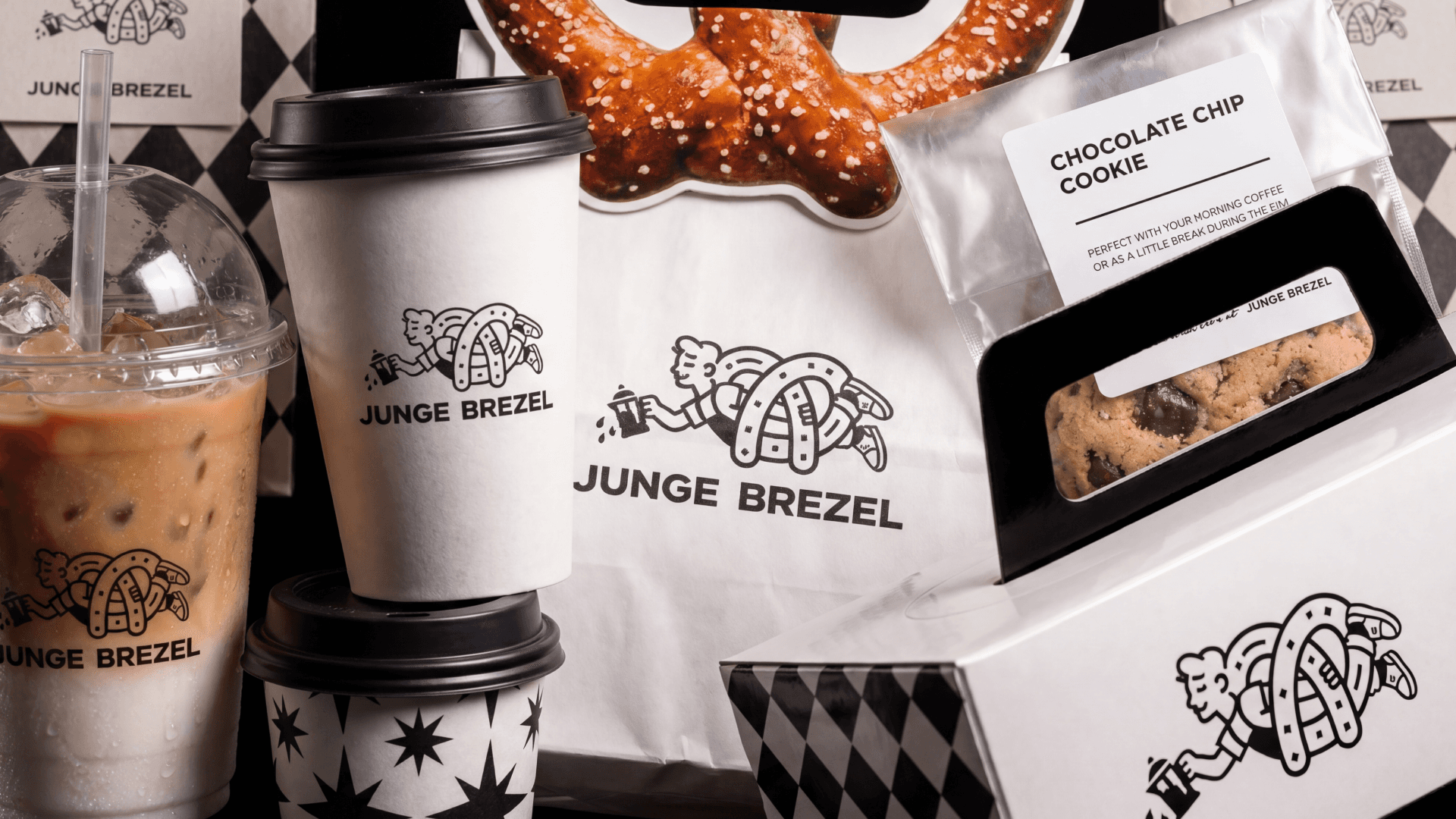
Junge Brezel is a self-initiated concept brand exploring how the traditions of German bakery culture can be reinterpreted for a contemporary urban context. The project began with a question: what does a German bakery brand look like when it strips away the nostalgia and keeps only what is genuinely strong? The answer turned out to be a strict black and white identity built around three graphic systems - a bold wordmark, a rhythmic geometric pattern, and a hand-drawn illustration - applied across a complete packaging suite.
Junge Brezel is a self-initiated concept brand exploring how the traditions of German bakery culture can be reinterpreted for a contemporary urban context. The project began with a question: what does a German bakery brand look like when it strips away the nostalgia and keeps only what is genuinely strong? The answer turned out to be a strict black and white identity built around three graphic systems - a bold wordmark, a rhythmic geometric pattern, and a hand-drawn illustration - applied across a complete packaging suite.
The Challenge
The Challenge
German bakery aesthetics carry a lot of cultural weight. The risk is always landing somewhere between heritage and pastiche. Too literal and the brand looks like a souvenir shop. Too stripped back and it loses the warmth and personality that makes bakery culture feel worth celebrating in the first place. The challenge was finding the tension between those two things and holding it precisely enough that the identity feels considered rather than safe.
German bakery aesthetics carry a lot of cultural weight. The risk is always landing somewhere between heritage and pastiche. Too literal and the brand looks like a souvenir shop. Too stripped back and it loses the warmth and personality that makes bakery culture feel worth celebrating in the first place. The challenge was finding the tension between those two things and holding it precisely enough that the identity feels considered rather than safe.
The Approach
The Approach
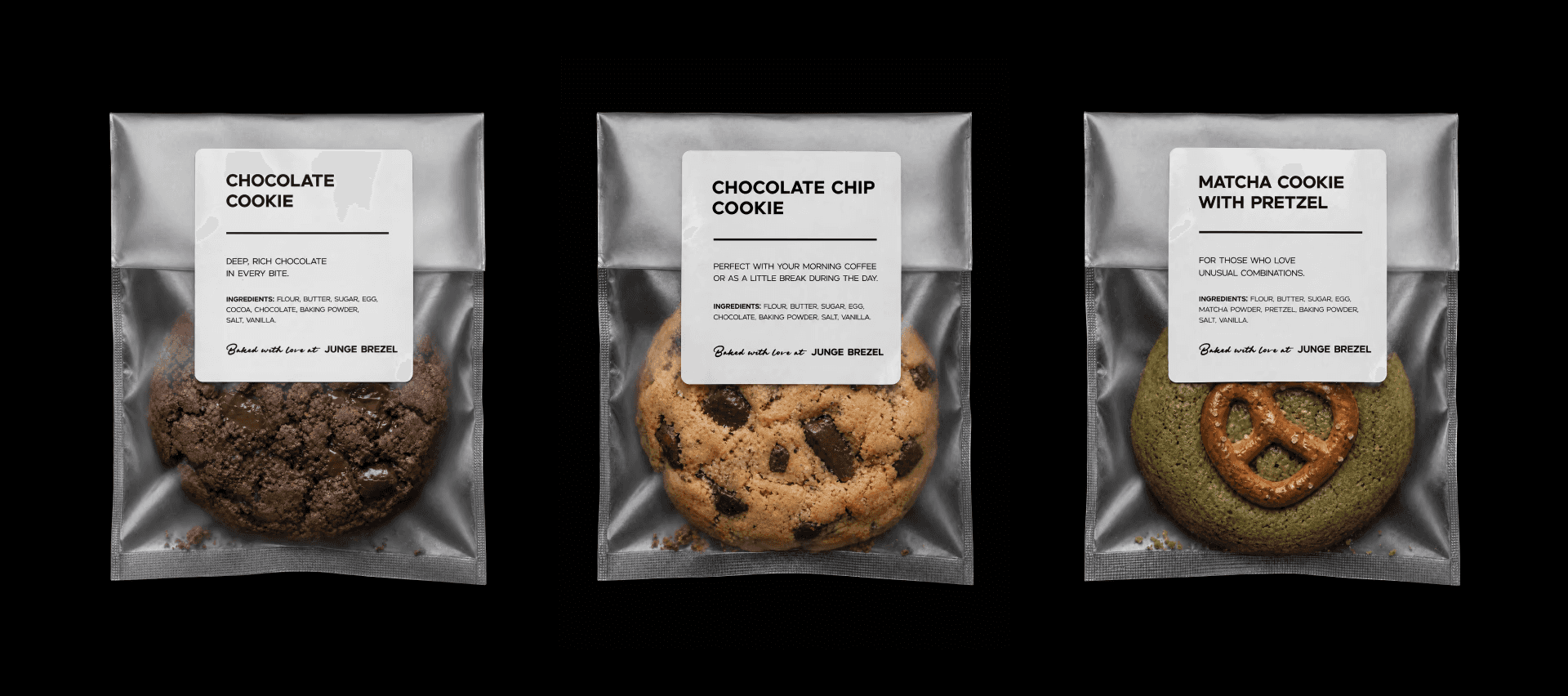
The first decision was the palette. Black and white only. No warm browns, no wheat golds, no heritage reds. The restriction forced every other element to work harder and gave the whole system a graphic confidence that color would have softened. A bakery brand that lives in pure black and white on white packaging immediately signals that it takes its design seriously.
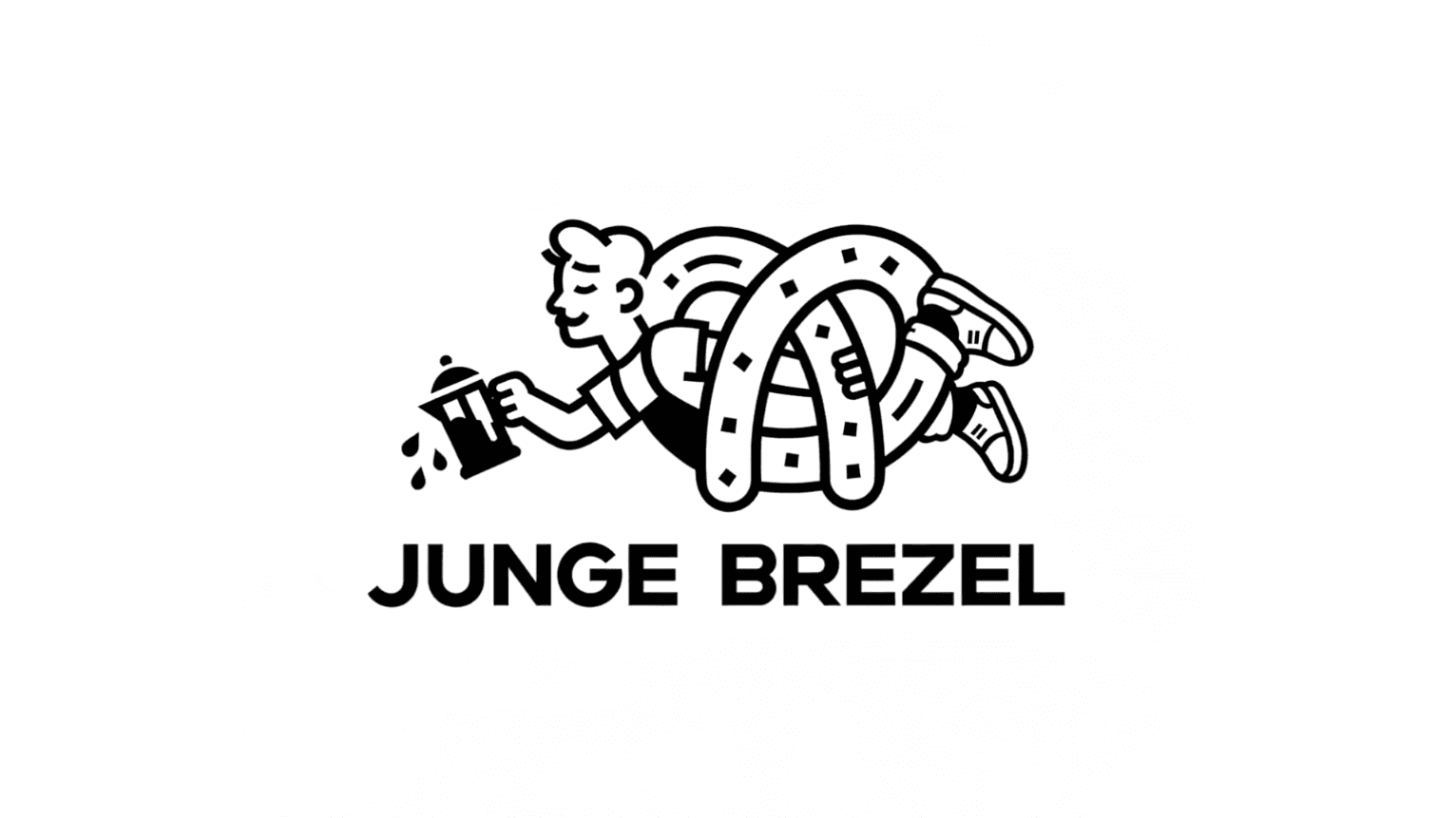
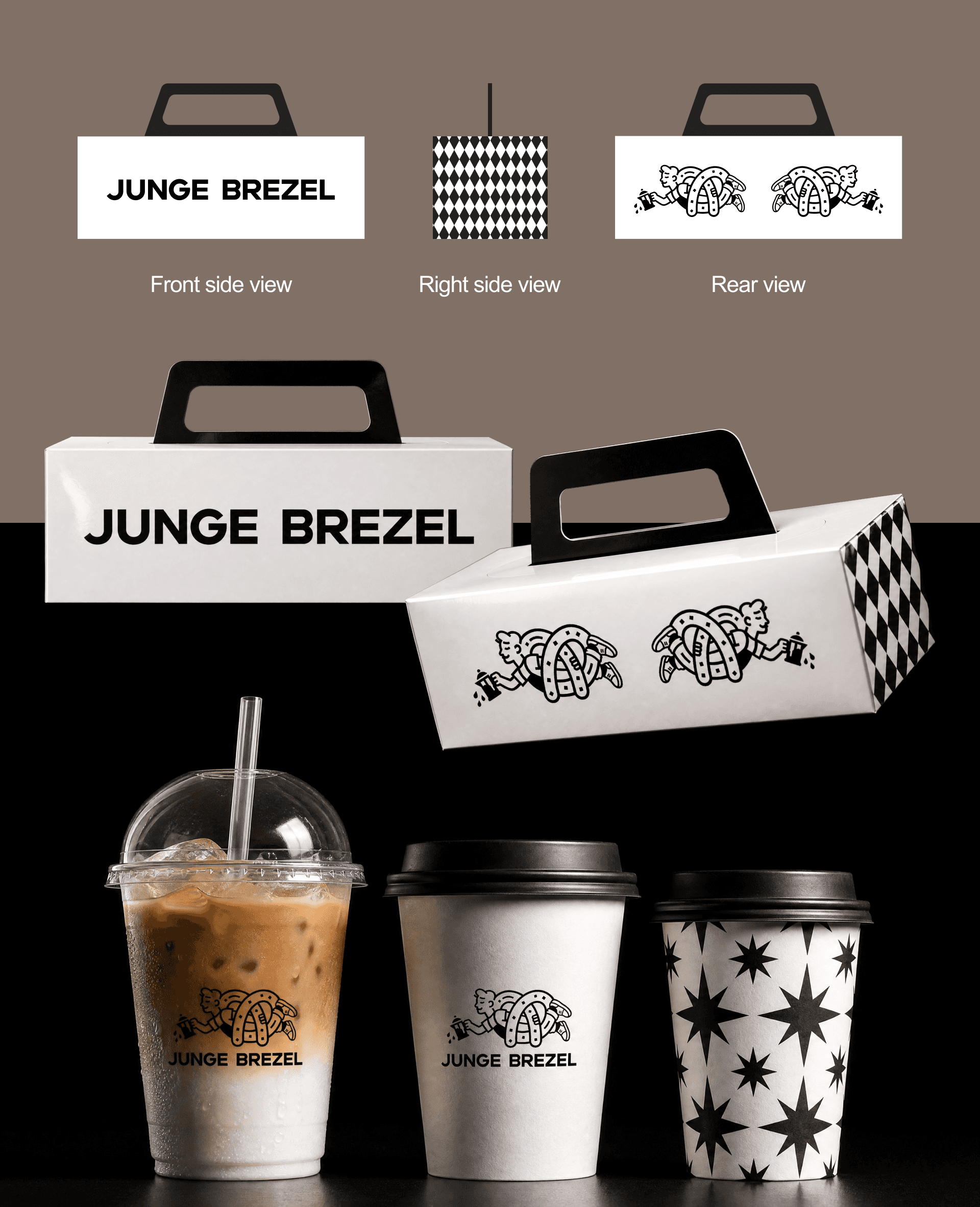
The wordmark came next. A bold condensed typeface with generous letter-spacing, set in uppercase, taking up the full front face of the packaging. No icon, no supporting graphic on the front - just the name, occupying the space with complete authority. The name does the work and the name is enough.
The first decision was the palette. Black and white only. No warm browns, no wheat golds, no heritage reds. The restriction forced every other element to work harder and gave the whole system a graphic confidence that color would have softened. A bakery brand that lives in pure black and white on white packaging immediately signals that it takes its design seriously.
The wordmark came next. A bold condensed typeface with generous letter-spacing, set in uppercase, taking up the full front face of the packaging. No icon, no supporting graphic on the front - just the name, occupying the space with complete authority. The name does the work and the name is enough.
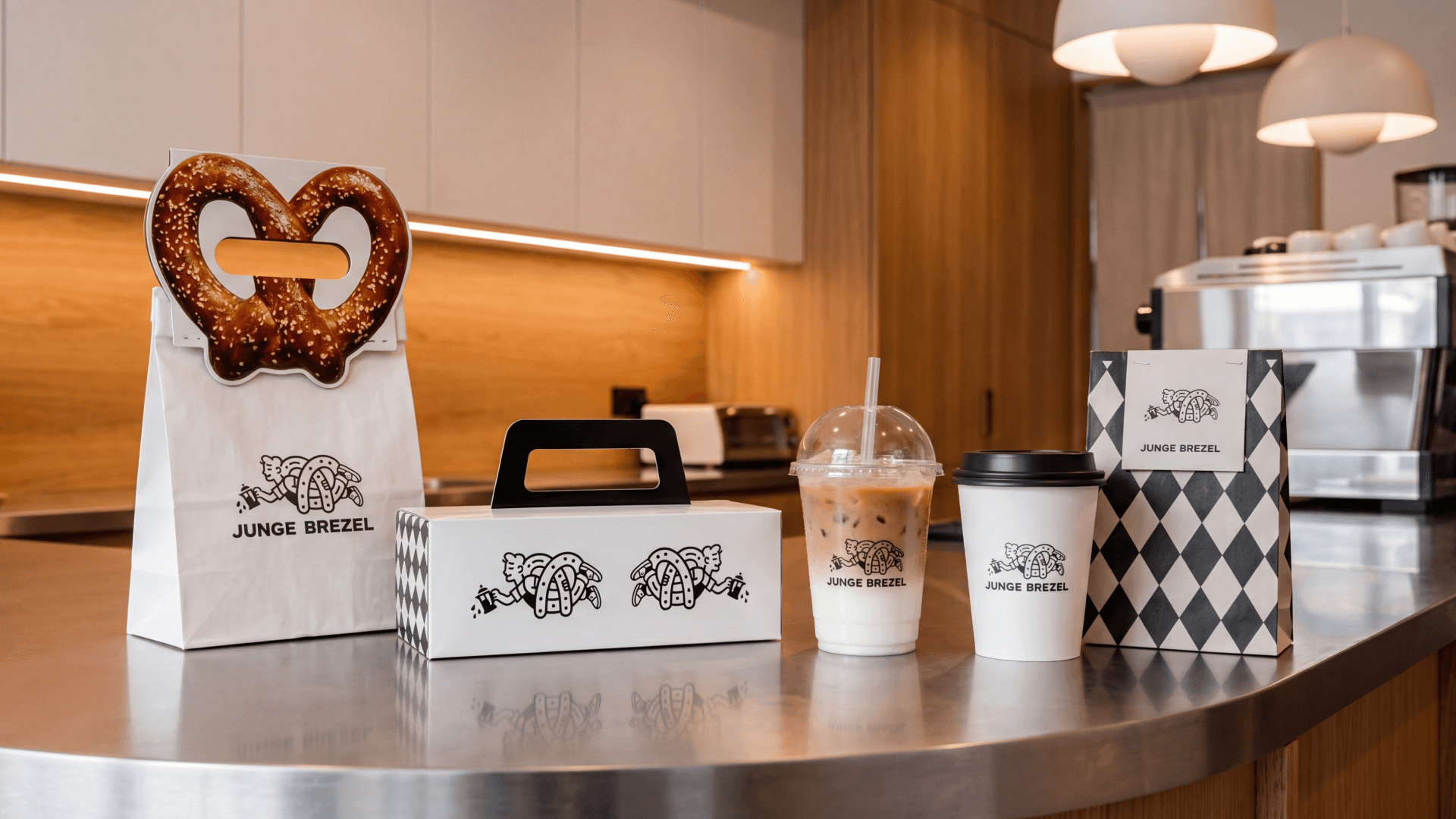
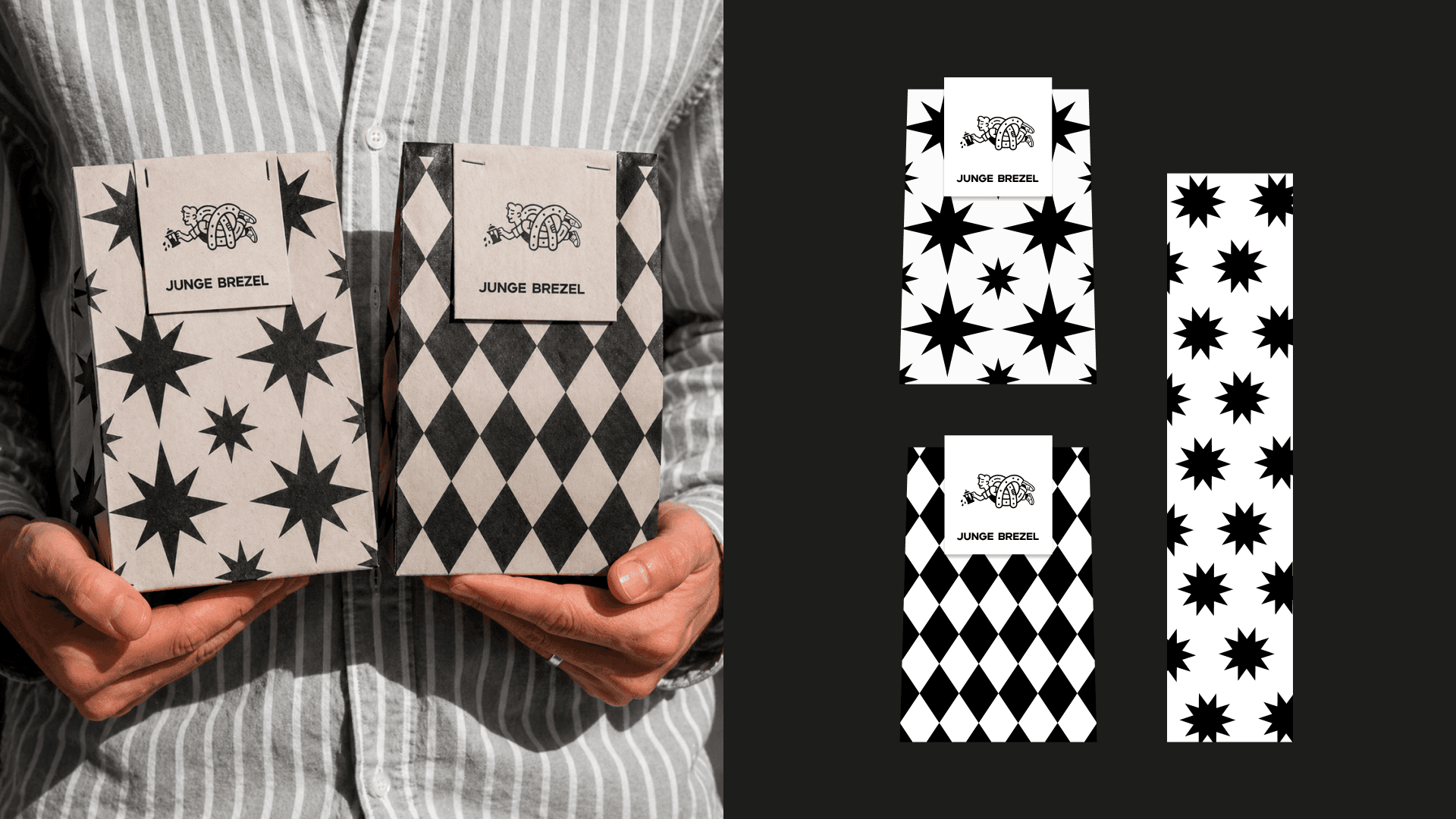
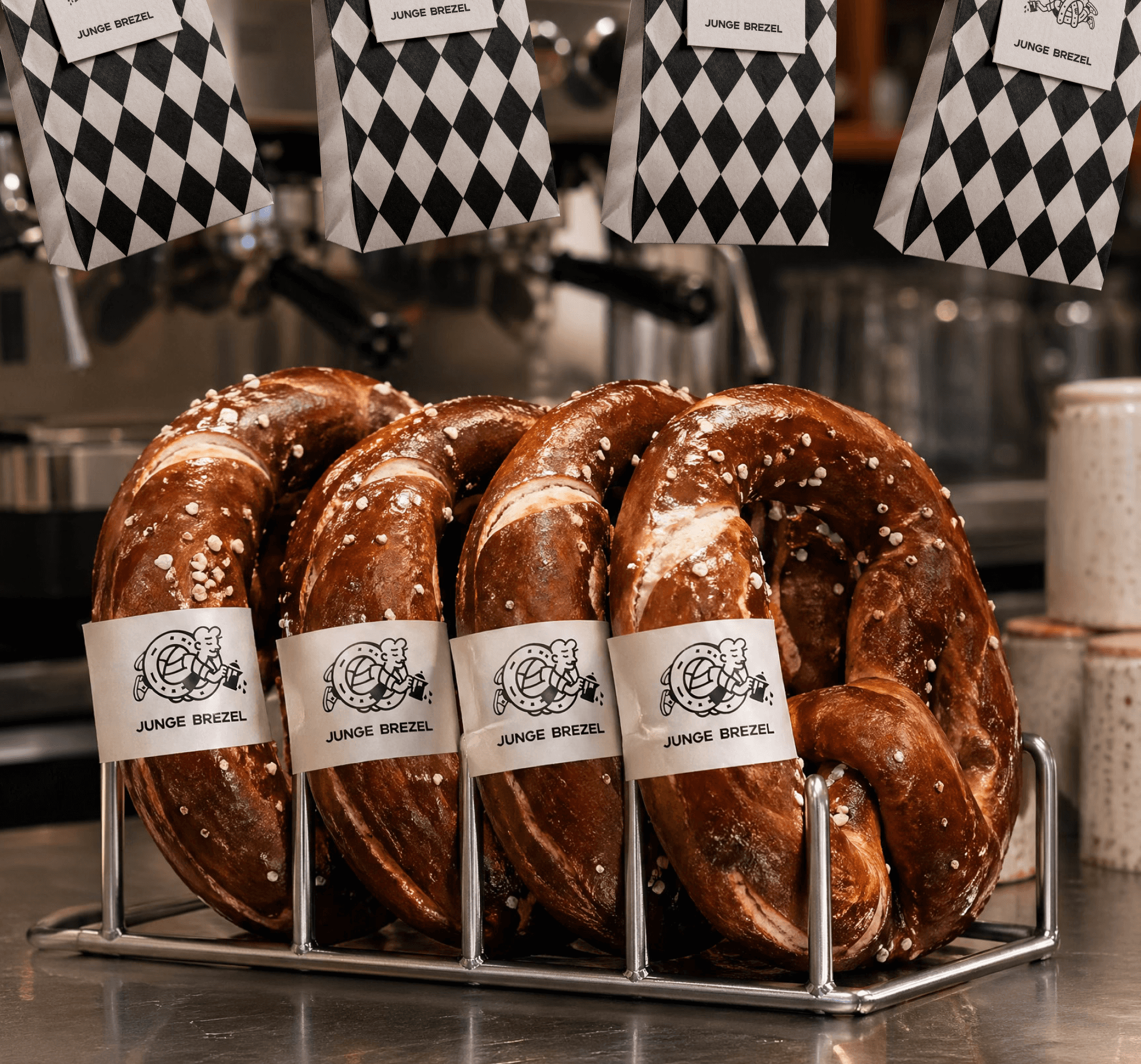
The diamond checker pattern references Bavarian folk geometry - specifically the harlequin diamond that appears in traditional German regional textiles and ceramics. Applied to the side face of the box and as a secondary surface pattern, it brings cultural specificity without being decorative for its own sake. It is structural and rhythmic rather than ornamental.
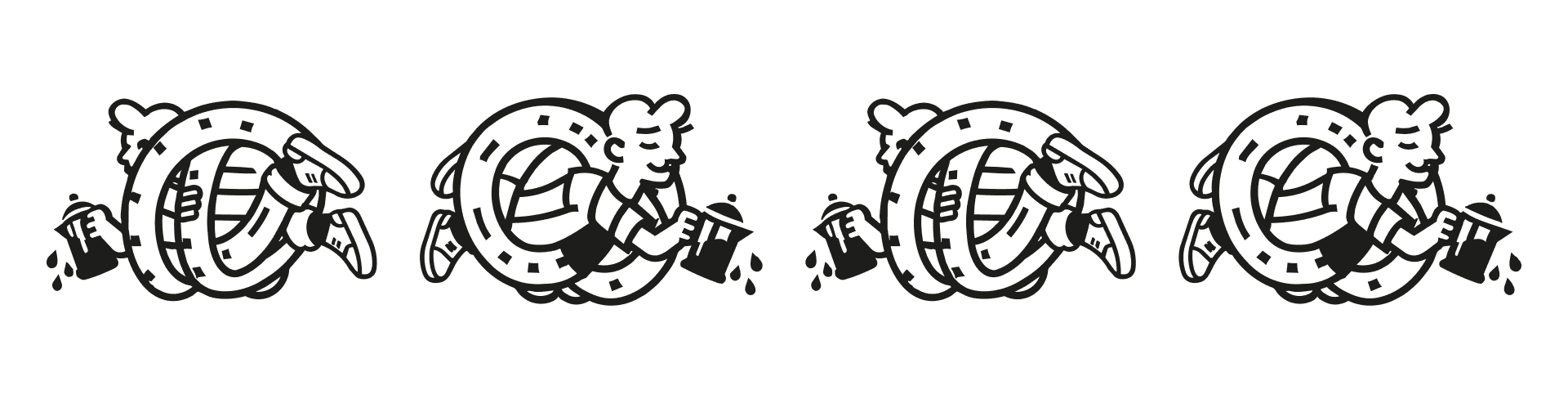
The illustration was the most technically demanding element. A running pretzel character — anthropomorphized, caught mid-stride, carrying the energy of something in motion. The line weight and the looseness of the drawing were deliberate. Too refined and it would have felt digital. The slight roughness gives it the quality of something hand-pressed or stamp-printed, which connects back to the artisan bakery context without stating it.
The diamond checker pattern references Bavarian folk geometry - specifically the harlequin diamond that appears in traditional German regional textiles and ceramics. Applied to the side face of the box and as a secondary surface pattern, it brings cultural specificity without being decorative for its own sake. It is structural and rhythmic rather than ornamental.
The illustration was the most technically demanding element. A running pretzel character — anthropomorphized, caught mid-stride, carrying the energy of something in motion. The line weight and the looseness of the drawing were deliberate. Too refined and it would have felt digital. The slight roughness gives it the quality of something hand-pressed or stamp-printed, which connects back to the artisan bakery context without stating it.
The Result
The Result
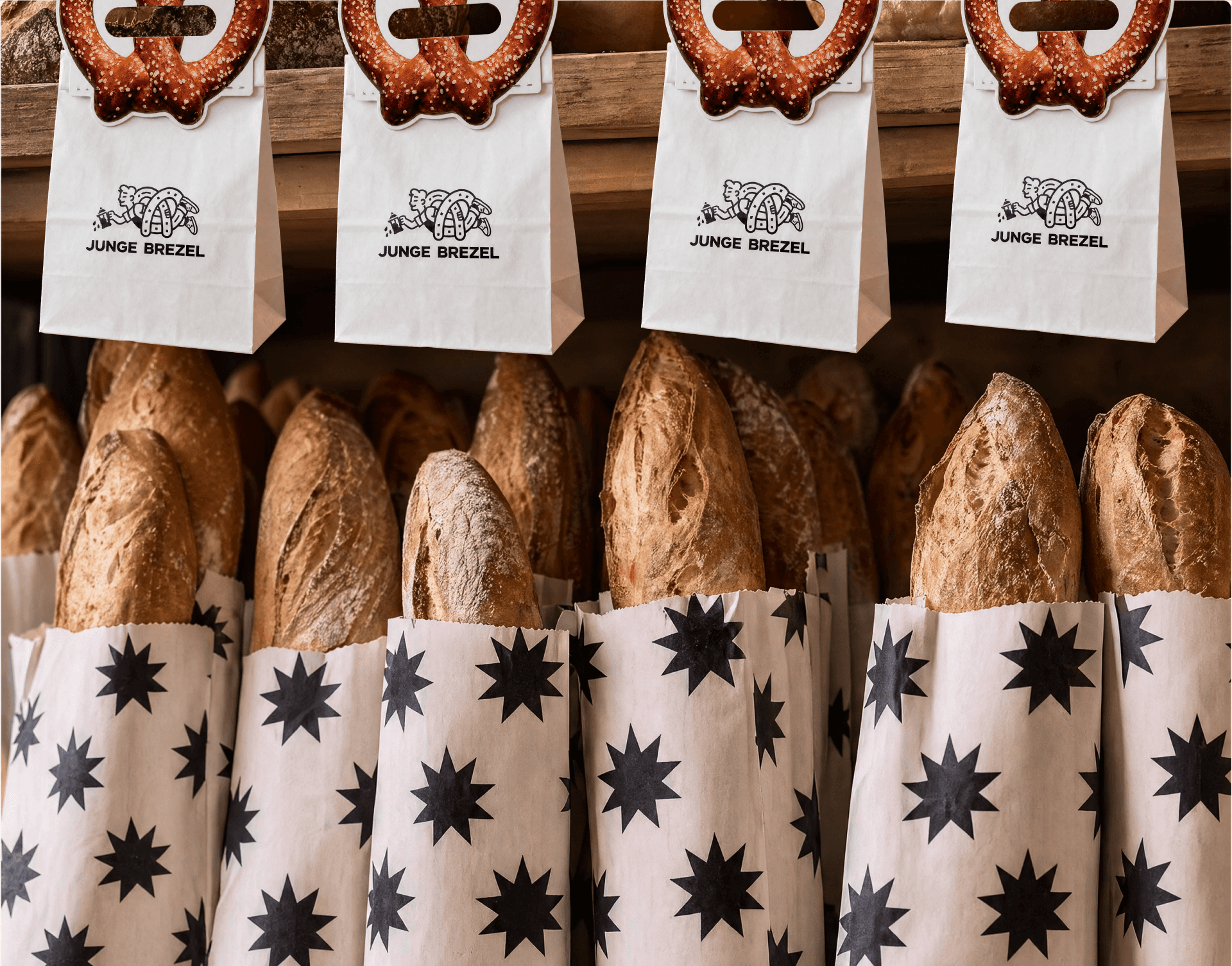
A complete packaging system demonstrating how cultural reference can be used with precision rather than sentimentality. The project shows how a strict constraint - black and white only - can become a creative advantage rather than a limitation, and how three distinct graphic systems can coexist within a single coherent identity.
A complete packaging system demonstrating how cultural reference can be used with precision rather than sentimentality. The project shows how a strict constraint - black and white only - can become a creative advantage rather than a limitation, and how three distinct graphic systems can coexist within a single coherent identity.
ANAND SAWRUP
ANAND SAWRUP